
Master Exotic Horse Racing Bets in the UK
 Available in US
Smart exotic bets. UK-focused. Data-backed.
A horse betting wheel is one of the most efficient structures in exotic wagering and one of the least understood by the average British punter. Every April, roughly 17% of UK adults place a bet on the Grand National, most of them staking a fiver and hoping for the best. That is perfectly fine as far as it goes. But for those who want more from their racing more structure, more strategy, more upside per pound risked — the wheel bet opens a door that a simple win or each-way punt cannot.
British horse racing is not a niche pursuit. The industry contributes an estimated £4.1 billion to the UK economy annually and supports around 85,000 jobs, from stable yards in Newmarket to betting shops in every high street. In 2025, total prize money reached a record £194.7 million, and racecourse attendance topped five million for the first time since before the pandemic. Meanwhile, the Grand National has been confirmed as the single most bet-on sporting event on the planet — ahead of the Super Bowl, the Champions League final, and the US Masters. The appetite for racing is enormous. The sophistication of most punters' bet types, however, has barely evolved beyond win and place.
That gap between the scale of the market and the simplicity of how most people engage with it is exactly where wheel betting sits. A wheel bet takes a key horse — the one you feel most confident about — and systematically pairs it with other runners to cover multiple finishing combinations. Instead of predicting the exact first and second, or first three, you anchor one position and let the wheel do the heavy lifting on the rest. The result is a structured exotic wager that costs less than covering every possible permutation, while still giving you exposure to potentially life-changing dividends.
This guide covers everything a UK-based punter needs to know about wheel betting in 2026: what the bet is, how it translates into British terminology, how to calculate costs, where to place these bets online, and how to build a strategy around them. Whether you are stepping beyond each-way for the first time or sharpening your existing exotic approach ahead of the spring festivals, the mechanics and data that follow will give you a concrete framework.
Wheel Bet in UK Horse Racing: Strategy, Costs and Payouts
- A wheel bet fixes one key horse and pairs it with other runners for exotic dividends — in the UK, this is done through combination forecasts and tricasts at any major bookmaker or the Tote.
- Full wheels cover every runner and suit small fields; partial wheels target selected contenders and cut costs dramatically — a partial trifecta in a 16-runner field costs £20 vs £210 for the full version.
- World Pool at Royal Ascot 2025 saw the Trifecta outpay the Tricast in 24 of 35 races — pool selection matters as much as horse selection.
- Favourites win roughly 30–35% of UK races, dropping to about 25.7% in handicaps — key-horse conviction must match these probabilities.
- Set a dedicated exotic bankroll (2–5% per wheel), start with exacta wheels, and scale into trifectas as your strike rate justifies the cost.
What Is a Wheel Bet — And Why UK Punters Call It Something Else
Wheel bet — an exotic wager that fixes one horse (the "key horse") in a specific finishing position and pairs it with all or selected other runners in the remaining positions. The key horse acts as the anchor; the other runners "wheel" around it.
The concept is straightforward once you strip away the jargon. Suppose you are watching a ten-runner handicap at Newbury and you are convinced that horse number 4 will finish first. You are far less certain about who will come second. A wheel bet solves the dilemma by locking horse number 4 into first and pairing it with every other runner for second place. If horse 4 wins, you collect the exacta dividend regardless of which runner finishes second.
The "key horse" is the load-bearing pillar of this structure. Get the key right and you have nine winning combinations in a ten-runner field. Get it wrong and you have nine losing slips. Wheel betting rewards conviction in one horse, not omniscience about the entire field — philosophically different from a boxed exotic, where you cover multiple horses in every position and pay a much steeper price.
Here is where British terminology creates confusion. If you open the Bet365 app and search for "wheel bet," you will not find it. In the UK, a two-horse finishing-order bet is a forecast (equivalent to the American exacta). A three-horse finishing-order bet is a tricast (equivalent to the trifecta). When you want to wheel-style the bet — fixing one horse and combining others — you place a combination forecast or combination tricast. The Tote, Britain's official pool betting operator, offers these as Tote Exacta and Tote Trifecta, where payouts come from a shared pool rather than fixed odds.
The terminology gap is not trivial. Search "wheel bet" in Google UK and you will find mostly American content. Almost none of the top results explain that UK punters already have access to identical bet structures through their everyday bookmakers. This guide bridges that gap, using British terminology alongside the universal wheel-bet language, with costs in pounds and field sizes drawn from BHA race data.
One more distinction worth noting. The wheel is not a bet type itself; it is a structuring method applied to exotic types (exacta, trifecta, superfecta). You choose the exotic type, then you choose the structuring method (wheel, box, or straight), and the combination determines both the cost and the range of winning outcomes.
Full Wheel vs Partial Wheel
Wheel betting in UK horse racing splits into two modes, and the distinction matters more than most beginners realise. A full wheel pairs your key horse with every other runner in the race. A partial wheel pairs your key horse with only the runners you select. The cost difference between the two can be dramatic, particularly in larger fields — and British fields are not small. According to the BHA's 2025 Racing Report, the average field size on the Flat stood at 8.90 runners, rising to 11.02 at Premier fixtures. In a sixteen-runner handicap at a festival meeting, the gap between full and partial becomes the gap between a reasonable wager and an expensive one.
Full Wheel — Every Runner Except Your Key Horse
A full wheel is the broadest version of the structure. You select your key horse for one position — say, first place — and the bet covers every remaining runner in the other position or positions. In an exacta wheel with ten runners, that means nine combinations. In a trifecta wheel with ten runners and your key in first, every possible combination of second and third is covered: 9 × 8 = 72 combinations at your base stake.
The appeal is simplicity and completeness. If your key horse lands in the designated position, one of your combinations will hit. The cost, however, scales linearly with exacta wheels and geometrically with trifecta and superfecta wheels. For an exacta full wheel at £1 in an eight-runner race, the cost is £7. In a sixteen-runner race, it doubles to £15. For a trifecta full wheel in that same sixteen-runner race, the cost balloons to 15 × 14 = £210. Many casual punters see the potential payout of a trifecta, build a full wheel without doing the arithmetic, and discover the total stake only at the bet slip stage.
Full wheels work best in smaller fields where the cost stays contained. A six-runner conditions race on the Flat might justify a full trifecta wheel at £1 (20 combinations, £20 total) if the favourite looks near-certain. In a big-field handicap, a full wheel almost always costs more than it should.
Partial Wheel — Handpicked Contenders Only
A partial wheel brings selectivity into the equation. Instead of covering every runner alongside your key horse, you choose a subset — typically three to six horses — that you believe are genuine contenders for the other positions.
Consider a sixteen-runner handicap. A full exacta wheel at £1 costs £15. A partial exacta wheel using your key horse and four selected runners costs just £4 — a 73% reduction. The trade-off: if the runner-up is a horse you excluded, you lose. The partial wheel punishes poor selection but rewards good handicapping.
Trifecta partial wheels show even more dramatic savings. In that sixteen-runner field, a full trifecta wheel costs £210. A partial trifecta wheel with your key in first and five selected runners for second and third costs 5 × 4 = just £20. Same field, same key horse, a tenth of the price. For most serious punters, the partial wheel is the default mode. It demands more analysis but keeps the cost proportionate to the bet's expected value. The full wheel is the safety net; the partial wheel is the scalpel.
Exacta, Trifecta and Superfecta Wheels
Wheel betting in UK horse racing can be applied to any exotic bet type that involves predicting finishing positions. The three main variants — exacta, trifecta and superfecta — differ in how many positions you must predict, how many combinations you generate, and how violently the cost escalates as the field grows. Understanding the maths behind each is not optional if you plan to use them regularly. The standard takeout on pool-based exotic bets runs at approximately 20% or higher for trifectas and superfectas, compared to roughly 16% on win bets, according to industry data compiled by Covers.com. That built-in house edge means your selections need to be sharper than they would for a simple win wager.
Exacta Wheel
The exacta (or forecast, in UK terms) requires you to predict the first two finishers in correct order. An exacta wheel fixes your key horse in one position — typically first — and wheels the remaining runners through the other position. The formula: for a full exacta wheel in an n-runner race, the number of combinations is (n − 1), multiplied by your base stake.
In a ten-runner race at £1 per combination, a full exacta wheel costs £9. The escalation is linear and manageable, making exacta wheels the most beginner-friendly exotic structure. Every major UK operator offers combination forecasts, which are functionally identical. You can also wheel your key horse into second place rather than first — useful when you believe a horse will run well but may not quite win.
Trifecta Wheel
The trifecta (tricast in British terminology) demands the first three finishers in exact order. A full trifecta wheel with one key horse in first position generates (n − 1) × (n − 2) combinations. In a ten-runner race: 9 × 8 = 72 combinations. At £1, the cost is £72. In a sixteen-runner field: 15 × 14 = £210.
Cost alert: A full trifecta wheel in a sixteen-runner field at just £1 per combination costs £210. Always calculate total outlay before confirming your bet slip.
Partial trifecta wheels dramatically reduce the cost. Fix your key in first, select five runners for second and third: 5 × 4 = 20 combinations, £20 at £1. The payoff potential justifies the complexity. During the 2021 Grand National, the Tote Trifecta paid £35,431.20 for a £1 stake, while the Computer Straight Tricast returned just £8,593.94 — illustrating how pool-based exotic dividends can dwarf their fixed-odds equivalents.
Superfecta Wheel
The superfecta asks for the first four finishers in correct order. The combinatorial explosion is severe. A full superfecta wheel with one key horse generates (n − 1) × (n − 2) × (n − 3) combinations. In a twelve-runner race, that is 11 × 10 × 9 = 990 combinations. At £1 per combination, nearly a thousand pounds on a single race. Even at a minimum Tote stake of 10p, that is £99.
This is why superfecta wheels are almost always run as partial structures, often with a "pyramid" approach: one key horse in first, two or three selections for second, three or four for third, and four to six for fourth. The pyramid keeps the cost manageable while maintaining exposure to the enormous dividends that superfecta pools can pay. A pyramid with 1 key × 3 second × 4 third × 5 fourth produces 60 combinations — £60 at £1 or £6 at 10p.
Superfecta wheels are best suited to large-field races where the pool is deep enough to generate significant dividends and where the complexity of picking the top four rewards structural thinking over pure guesswork. Premier festivals — Cheltenham, Ascot, Aintree — are the natural habitat. The typical midweek six-runner novice stakes is not. If the field is too small, the superfecta dividend often fails to compensate for the cost and difficulty of the bet.
UK Context: Forecasts, Tricasts and the Tote
Wheel betting in UK horse racing does not happen in a vacuum. It happens within a market that generated £16.8 billion in gross gambling yield across all sectors in the financial year ending March 2025 — a 7.3% year-on-year increase. Within that, remote (online) horse racing betting produced £766.7 million in GGY, making it the second-largest remote betting sport behind football. These are not niche numbers. Horse racing remains embedded in British sporting culture, and the infrastructure for exotic betting — forecasts, tricasts, pool bets — is mature and widely accessible.
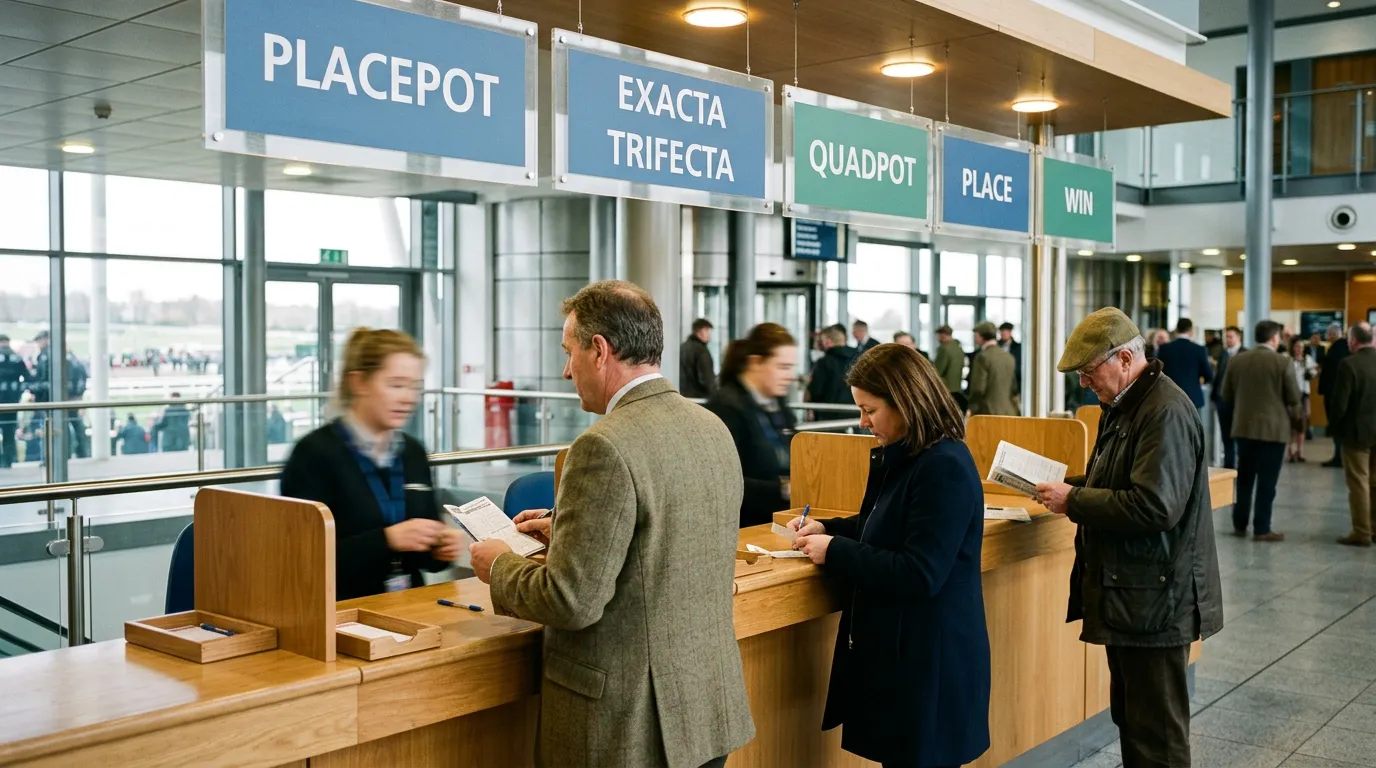
The key to navigating that infrastructure is understanding the three channels through which UK punters can place exotic wagers. First, bookmaker fixed-odds forecasts and tricasts: operators like Bet365, Ladbrokes and Coral offer straight and combination forecasts (exacta equivalents) and straight and combination tricasts (trifecta equivalents). Payouts are determined by the Computer Straight Forecast (CSF) or Computer Straight Tricast (CST) formula — an algorithm that calculates a "fair" dividend based on the starting prices of the placed horses. These are not fixed odds in the traditional sense; the payout is determined after the race.
Second, the Tote. The UK Tote operates pool betting where all stakes on a given bet type flow into a shared pool, and the payout is calculated by dividing the pool among winning ticket holders after a deduction (the takeout). Tote Exacta and Tote Trifecta are the direct pool equivalents of forecasts and tricasts. Pool dividends can be higher or lower than the CSF/CST equivalent — it depends on how the money in the pool is distributed across combinations.
Third, and increasingly significant, is the World Pool. Operated by the Hong Kong Jockey Club in partnership with the UK Tote Group, the World Pool merges bets from punters across multiple countries into a single enormous pool. The scale of liquidity changes the maths entirely. At Royal Ascot 2025, World Pool turnover reached approximately £150 million — a 10% increase on 2024. Across the meeting, the World Pool Exacta outperformed the local Forecast in 23 of 35 races, and the Trifecta beat the Tricast in 24 of 35.
"World Pool continues to drive some great value for customers, with dividends consistently outperforming the local SP" — Sam Nati, Head of Commingling, Hong Kong Jockey Club. That claim is backed by the data: in 2024, UK punters contributed £137 million to the World Pool at Royal Ascot alone, up from £92 million the previous year. Alex Frost, Chief Executive of the UK Tote Group, noted that the product "perfectly showcases the enduring appeal of British racing's highest profile flat meeting, particularly with an international audience."
For wheel-bet practitioners, the World Pool matters because it affects which channel delivers the best dividend. If you are placing a Tote Trifecta on a World Pool race — typically Premier flat fixtures — your payout comes from a pool that may exceed £10 million for a single race. That depth of liquidity tends to produce more generous returns than the CST formula, particularly on less-fancied combinations.
The Horserace Betting Levy Board collected a record £108.9 million in levy receipts for 2024/25 — the highest since the levy reform of 2017. Yet betting turnover per race has fallen 8% year-on-year and 19% compared to 2021/22. The paradox of rising levy income and falling turnover reflects fewer bets placed at higher average stakes — partly driven by affordability checks pushing some recreational punters away from licensed operators.
This context matters because a shrinking recreational base means thinner pool liquidity on smaller race days and more volatile dividends. Marquee meetings with World Pool integration offer deeper, more predictable pools. Knowing where the money is — and where it is not — is as much a part of exotic strategy as picking the right key horse.
Wheel vs Box vs Each-Way
Wheel betting in UK horse racing is only one way to structure an exotic wager. Two other approaches compete for your stake money: the box bet and the venerable each-way. Each has a distinct risk-reward profile, and choosing the wrong structure for the situation is one of the most common — and most expensive — errors punters make.
| Feature | Wheel | Box | Each-Way |
|---|---|---|---|
| Positions to predict | Key horse fixed; others open | All selected horses in any order combination | Win + place (typically top 2–4) |
| Cost driver | Number of non-key runners included | Number of selections squared or cubed | Double the win stake |
| Exacta example: 10-runner, 4 selections, £1 | £3 (key + 3 others) | £12 (4 × 3 permutations) | N/A |
| Trifecta example: 10-runner, 4 selections, £1 | £6 (key + 3 for 2nd/3rd) | £24 (4 × 3 × 2) | N/A |
| Requires strong key horse? | Yes | No | No |
| Upside potential | High (exotic dividend) | High (same dividend, higher cost) | Moderate (fixed-odds or SP return) |
| Best for | Punters with one strong opinion | Punters unsure of exact order | Punters wanting insurance on a win selection |
The cost difference between wheel and box deserves emphasis. In the trifecta example above, the box costs four times more than the wheel for the same four horses — because the box covers every possible ordering, while the wheel fixes one horse and only varies the rest. The payout, however, is identical. A winning trifecta combination pays the same dividend whether it came from a wheel ticket or a box ticket. This is why experienced exotic punters default to partial wheels: they accept the risk of being wrong about the key horse in exchange for a lower cost that translates directly into better return on investment.
Each-way betting occupies a different philosophical space. It does not predict finishing order — it splits your stake between a win bet and a place bet on the same horse. The upside is capped: no each-way bet will deliver the five-figure dividends that trifecta pools routinely produce at major festivals. A £1 Tote Trifecta at the 2021 Grand National returned £35,431 — a payout that sits in a different universe from the best each-way return on the same race card.
The choice is situational. If you have a strong view on one horse, the wheel is your tool. If you have opinions on multiple horses but no hierarchy, the box may honestly reflect your uncertainty. If you simply fancy a horse without wanting to predict finishing sequences, each-way remains the most efficient expression of that opinion. Match the structure to the shape of your conviction.
How to Calculate Wheel Bet Costs
Exotic bet costs catch punters off guard more often than bad selections do. The formulas are simple in isolation, but they interact with field size in ways that are not always intuitive. Before you build any wheel, run the numbers. Here are the core formulas, where n is the total number of runners and s is your base stake per combination.
Exacta (forecast) full wheel: (n − 1) × s. In an eight-runner race at £1: 7 × £1 = £7. In a twelve-runner race: 11 × £1 = £11.
Wheel Bet Cost Calculator
Price any forecast, tricast or superfecta wheel — and see what a box would cost
A wheel fixes your key horse and pairs it with others — cheaper than boxing the same runners, for the identical dividend. Set your bet below to see the combinations, the total outlay, and exactly how much the wheel saves over a box.
Trifecta (tricast) full wheel, one key horse in first: (n − 1) × (n − 2) × s. Eight runners: 7 × 6 × £1 = £42. Twelve runners: 11 × 10 × £1 = £110. Sixteen runners: 15 × 14 × £1 = £210.
Superfecta full wheel, one key horse in first: (n − 1) × (n − 2) × (n − 3) × s. Twelve runners: 11 × 10 × 9 × £1 = £990. Sixteen runners: 15 × 14 × 13 × £1 = £2,730.
Partial wheel: Replace (n − 1) with the number of selected runners for each position. For a partial trifecta with key in first, five selections for second, four for third: 5 × 4 × £1 = £20.
The field sizes used above are not hypothetical. BHA data from the 2025 Racing Report puts the average Flat field at 8.90 runners and the average Premier fixture field at 11.02. A Heritage Handicap at Goodwood or a Cheltenham Festival race can easily draw sixteen or more. Knowing your typical field size before the declarations are published gives you a ballpark budget for the day.
| Field Size | Exacta Full Wheel (£1) | Trifecta Full Wheel (£1) | Superfecta Full Wheel (£1) |
|---|---|---|---|
| 6 runners | £5 | £20 | £60 |
| 8 runners | £7 | £42 | £210 |
| 10 runners | £9 | £72 | £504 |
| 12 runners | £11 | £110 | £990 |
| 16 runners | £15 | £210 | £2,730 |
The table makes the escalation visible. Exacta wheels scale gently. Trifecta wheels accelerate. Superfecta wheels go vertical. This is why partial wheels and pyramid structures exist: they are cost-containment mechanisms. A partial trifecta with five runners for second and third costs £20 regardless of whether the race has ten runners or twenty — your selections, not the field size, drive the bill.
One cost factor that sits below the surface is the pool takeout. When you bet into a Tote or World Pool, the operator deducts a percentage before distributing the winnings. On exotic pools — Exacta, Trifecta, Placepot — the takeout is typically 20% or higher, compared to around 16% on win pools. For every £100 wagered into a Tote Trifecta pool, roughly £80 is returned to winning punters. Over a season of exotic betting, that drag compounds. Factoring takeout into your cost-benefit analysis is non-negotiable.
Wheel Bet Strategy for UK Races
Wheel betting in UK horse racing without a strategy is just a more complicated way to lose money. The structure gives you leverage — one correct selection unlocks multiple winning combinations — but leverage cuts both ways. Strategy converts a wheel from an expensive novelty into a repeatable approach.
British racing lends itself to strategic exotic play because the data infrastructure is excellent. Form figures, official ratings, going reports, trainer statistics, draw analysis — all publicly available. As trainer John Gosden has observed, "gambling on horseracing requires deep research, a high degree of knowledge and understanding of a host of factors including form, going, draw, distance, pedigrees, jockey and trainer." That assessment applies doubly to exotic wagers, where the margin for error is thinner and the reward for precision is greater.
Key Horse Selection
Your key horse is the single most important decision in any wheel bet. If the key horse fails to hit the designated position, the entire structure collapses.
Start with the numbers. Favourites in British horse racing win approximately 30–35% of all races. At the 2024 Grand National Festival, the favourite won in 7 of 21 races — a 33% strike rate. In handicap races, the favourite win rate drops to roughly 25.7%. If your wheel relies on a handicap favourite as the key horse, you are building on a foundation that fails three times out of four. In conditions races and Group events, the foundation is sturdier.
Beyond raw win rates, look for convergence: a horse whose form reads well, whose trainer is in form, whose jockey has a strong record at the course, whose going preference matches the day's conditions, and whose class rating suggests it is well-treated. No single factor is sufficient. A practical filter: ask yourself whether you would back this horse in a straight win bet at the available odds. If the answer is yes without hesitation, it is a viable key horse. If qualifications are needed, your conviction is conditional — and a wheel built on conditional conviction is a wheel built on sand.
Field Size Matters
Field size determines the cost of your wheel and influences the probability of your key horse landing in the designated position. Both factors push in the same direction: as fields grow larger, your bet costs more and your key horse faces stiffer competition. The sweet spot for most wheel bettors lies in fields of eight to twelve runners — large enough to generate meaningful exotic dividends, small enough to keep costs rational.
BHA data underscores this. The average Flat field in 2025 was 8.90 runners, but Premier fixtures averaged 11.02. Meanwhile, the number of horses in training continues to decline — 21,728 in 2025, down 2.3% from the previous year. Fewer horses in training means smaller average fields over time, which in turn means lower wheel costs but also thinner pools and potentially less volatile (and less lucrative) exotic dividends.
For practical budgeting, consider this heuristic. In fields of six to eight runners, a full exacta wheel at £1 is always affordable (£5–£7), and even a full trifecta wheel stays below £50. In fields of nine to twelve, partial wheels become the default for trifectas unless your bankroll comfortably absorbs three-figure stakes per race. Beyond twelve runners, full trifecta and superfecta wheels are cost-prohibitive for most recreational punters, and partial or pyramid structures are essential.
The spring 2026 Flat season offers a useful lens. Early-season races at Doncaster and Newbury tend to have smaller fields — the ground is testing and trainers are cautious. By Royal Ascot in June, fields are routinely double digits. Planning your wheel budget around the seasonal field-size curve is not overthinking — it is basic resource allocation.
Bankroll Discipline
Exotic bets consume bankrolls faster than any other bet type if left unchecked. A punter who plays three trifecta wheels per racing day at an average cost of £40 each is spending £120 per session, potentially £600 per week. Without a disciplined staking plan, the cumulative cost overwhelms even a good strike rate.
The most practical framework is percentage-based staking. Allocate a fixed percentage of your exotic bankroll — typically 2–5% — to each wheel bet. If your total exotic budget for the month is £500, a 3% allocation means a maximum of £15 per wheel. That limit forces selectivity: you cannot play every race, so you play only the races where your key horse conviction is highest and the cost-value equation is most favourable.
Separate your exotic bankroll from your standard betting bankroll. Exotics have a fundamentally different return profile — lower strike rate, higher variance, larger individual payouts — and mixing the two creates distorted expectations. A win-bet punter who strikes at 25% and breaks even on a Saturday may feel like a failure if their exotic bankroll is in the red. A dedicated exotic pot, with its own targets and its own limits, removes that emotional contamination.
Market headwinds reinforce the need for discipline. Overall horse racing betting turnover in the UK fell by 16.3% between 2021/22 and 2023/24, reaching £8.73 billion — a decline that, adjusted for inflation, represents roughly £3 billion in lost wagering activity over three years. In a contracting market, pools can be thinner, dividends more erratic, and the value of each exotic pound spent harder to recover. Disciplined staking is not just good practice; in the current climate, it is survival.
How to Place a Wheel Bet Online at UK Bookmakers
Placing a wheel-style exotic bet at a UK bookmaker is simpler than the terminology suggests. Mobile accounts for over 70% of all online gambling activity in the UK, and a YouGov survey ahead of the 2025 Grand National found that 62% of those planning to bet intended to do so online.
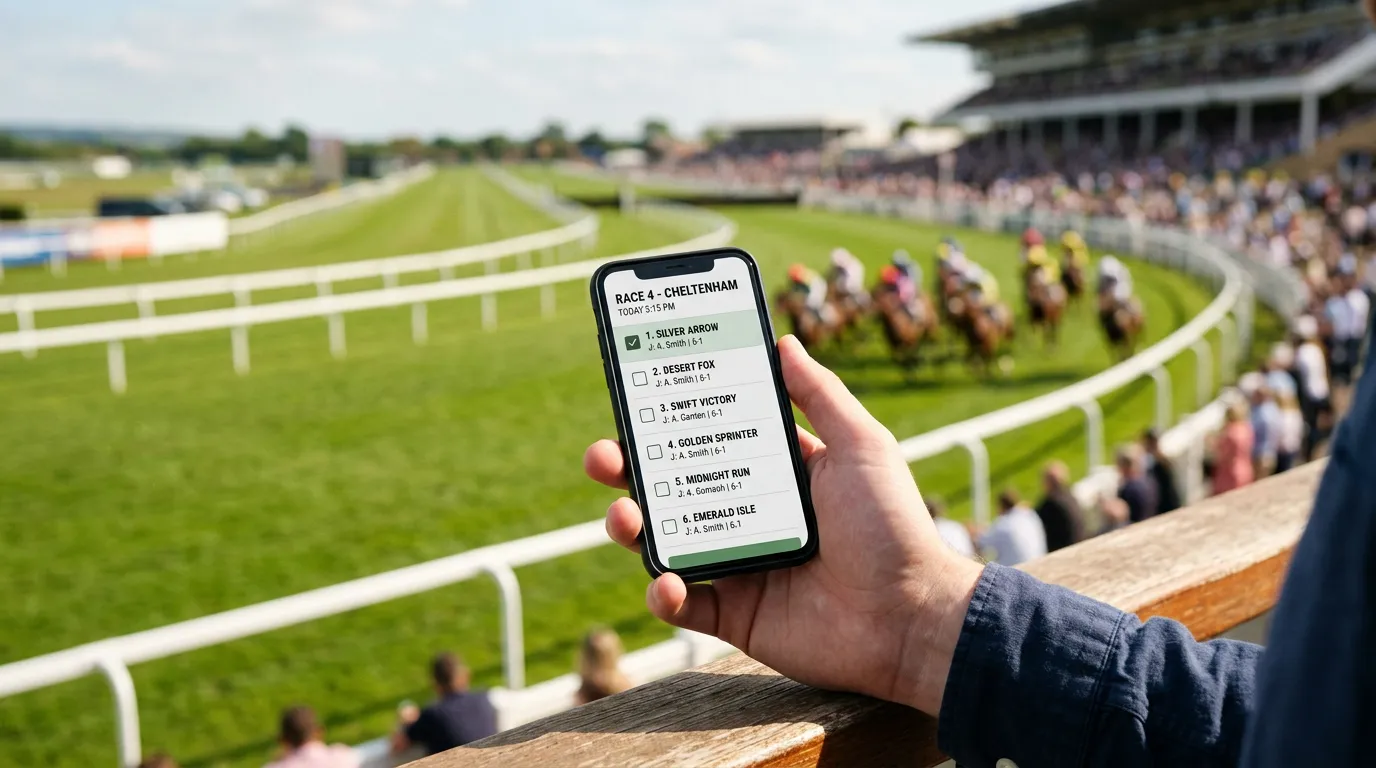
Step 1: Navigate to the race card. Open your bookmaker app (Bet365, Ladbrokes, Coral, or the Tote) and select the meeting and race.
Step 2: Open the forecast or tricast market. Below the standard win and each-way odds, look for "Forecast," "Tricast," or "Exotic Bets." On Bet365, this appears as a toggle. On Ladbrokes, you may need to tap "More Markets." The Tote app lists Exacta and Trifecta pools separately.
Step 3: Select your key horse. Tap the horse you want as your anchor. Your first selection typically goes into the "1st" column by default.
Step 4: Add your other selections. For a full wheel, select every remaining runner. For a partial wheel, choose only your preferred contenders. The platform's "Combination Forecast" or "Combination Tricast" option automatically generates all permutations.
Step 5: Set your unit stake and review. Enter your base stake per combination. The bet slip shows the total cost — combinations multiplied by unit stake. Check this figure before confirming.
Step 6: Confirm and monitor. Bookmaker forecasts and tricasts settle via the CSF or CST formula; Tote bets settle at the declared pool dividend.
If the race carries World Pool coverage (flagged on the Tote interface), consider placing your exotic through the Tote. The global liquidity can produce significantly better dividends, particularly on trifecta combinations.
Real Examples from British Tracks
Theory sharpens with illustration. The three biggest meetings on the British racing calendar — the Grand National, Cheltenham Festival, and Royal Ascot — each present a distinct wheel-betting landscape. The field sizes, pool depths, and race characteristics differ enough that the same wheel structure can be a shrewd bet at one meeting and a reckless one at another.
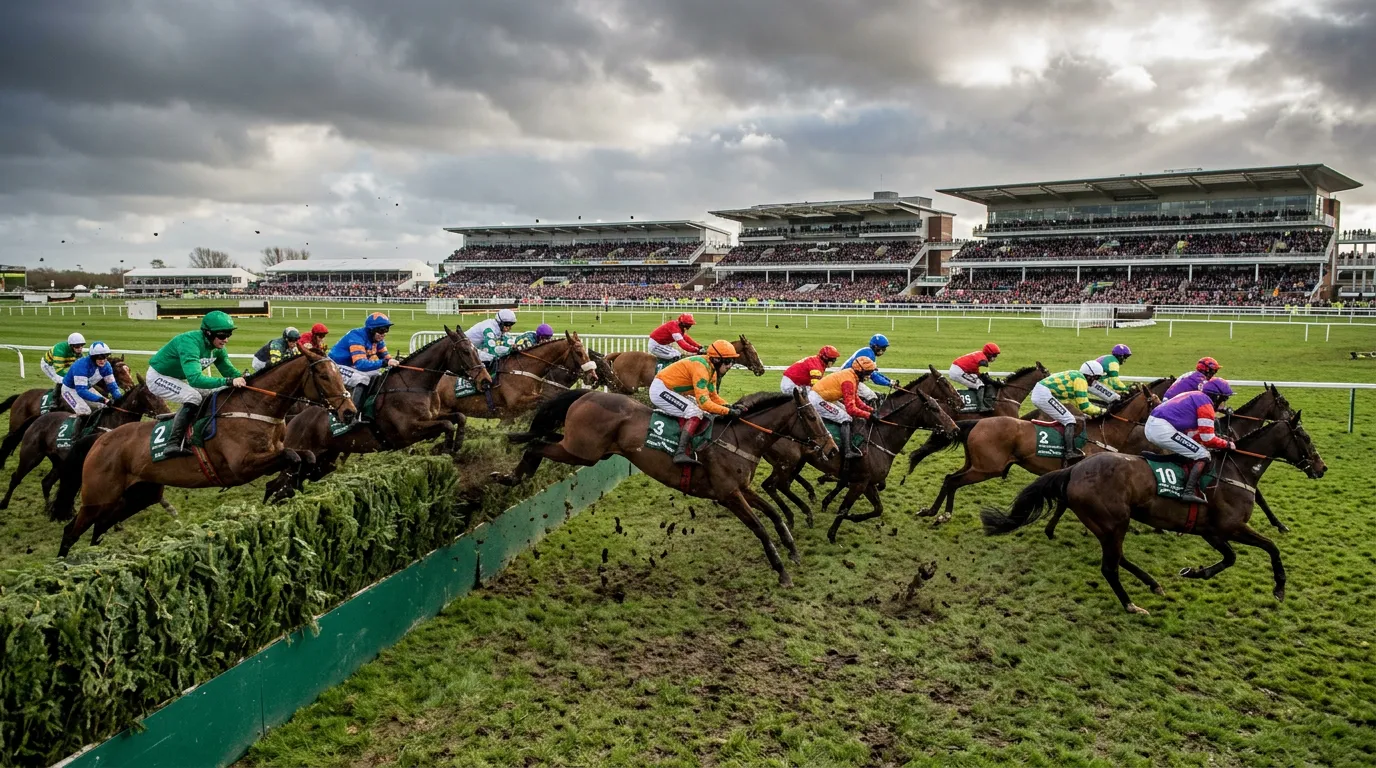
Grand National, Aintree. The world's most famous steeplechase is also, statistically, the most bet-on sporting event on the planet. Entain's analysis ranks the Grand National as the number-one betting event globally, surpassing the Super Bowl. The race generates over £200 million in betting turnover, and the wider Aintree festival exceeds £250 million. Approximately half of Grand National turnover comes from casual punters staking £5 or less — the once-a-year crowd who pick a name they like and hope for the best.
For wheel bettors, the Grand National's thirty-four-runner field (reduced from forty in 2024 for safety reasons) creates both opportunity and challenge. A full trifecta wheel at £1 would cost 33 × 32 = £1,056 — wildly impractical. A partial approach is essential. A pyramid structure with one key horse in first, five selections for second, and eight for third generates 40 combinations — a manageable £40 for a shot at a five-figure trifecta dividend. As Entain Managing Director Greg Ferris has noted, events like the Grand National "are cultural phenomena that transcend sports and are annual traditions for recreational customers." That cultural weight fills the pools — and full pools mean juicy dividends.
The Grand National generates 700% more betting turnover than the Cheltenham Gold Cup, according to Entain data — making it not just the UK's biggest race but by far its biggest betting event.
Cheltenham Festival. Four days, 28 races, fields typically ranging from eight to twenty-plus runners. Cheltenham mixes small-field Championship races (Gold Cup, Champion Hurdle — eight to twelve runners) with big-field handicaps (County Hurdle, Martin Pipe — often twenty-plus). Full exacta wheels are cost-effective in the Championship races; partial trifecta wheels or pyramids suit the handicaps.
Royal Ascot. Five days of Flat racing with World Pool coverage on most races. With turnover exceeding £150 million across the meeting in 2025, the pools here are deeper than anywhere else on the British calendar. In 24 of 35 races at Royal Ascot 2025, the World Pool Trifecta paid more than the local Tricast. If you are going to play trifecta wheels anywhere, Ascot in June is the place. Fields range from six in Group 1 contests to twenty-plus in the Royal Hunt Cup, so matching your wheel structure to the race type remains the operative skill.
Pros and Cons of Wheel Betting
No bet type is universally superior, and wheel betting is no exception. Its strengths are genuine — but so are its limitations, and the punter who ignores either ends up underusing the tool or over-relying on it.
On the credit side, wheels offer the most cost-efficient route into exotic betting. Compared to boxing the same horses, a wheel cuts your outlay by fixing one position. The structure forces analytical discipline: you must identify a key horse, which means studying form, going, and race conditions. And the payoff ceiling is high — a single successful trifecta wheel at a major meeting can return more than a month of winning each-way bets.
The debit side is equally real. If the key horse misses the designated position, every combination loses — no partial return, no place dividend. The cost of trifecta and superfecta wheels in large fields escalates faster than punters anticipate. And pool takeout (20%+ on exotics) means you need to be meaningfully better than the crowd to profit over time.
Wheel betting rewards conviction and penalises vagueness. If you can reliably identify a single strong contender — even one race in three — the structure converts that skill into outsized returns. If you cannot, the maths works against you faster than it does for simpler bet types.
Frequently Asked Questions
What is a wheel bet in horse racing and how does it work?
A wheel bet is an exotic wagering structure that fixes one horse — the key horse — in a specific finishing position and pairs it with multiple other runners in the remaining positions. For example, in an exacta wheel, you lock your key horse into first place and wheel every other runner through second place. If your key horse wins, you collect the exacta dividend regardless of who finishes second. The approach costs less than a boxed exotic because it eliminates combinations where your key horse finishes anywhere other than the designated spot. In the UK, the equivalent structures are called combination forecasts and combination tricasts, available at all major bookmakers and through the Tote.
What is the difference between a full wheel and a partial wheel?
A full wheel pairs your key horse with every other runner in the race. In a ten-runner field, a full exacta wheel at £1 costs £9. A partial wheel pairs your key horse only with selected runners you believe are genuine contenders — in the same field, using four selections, it costs just £4. The full wheel guarantees that if your key horse hits the target position, one combination will win. The partial wheel offers no such guarantee but saves significantly on cost. Most experienced exotic bettors default to partial wheels because the savings compound over a season of betting.
Can you place wheel bets with UK bookmakers like Bet365, Ladbrokes or Coral?
Yes, though the bet is not labelled "wheel" on UK platforms. Bet365, Ladbrokes, Coral and other licensed operators offer combination forecasts and combination tricasts, which are functionally identical to wheel bets. Navigate to the forecast or tricast market for your chosen race, pick your key horse, add your other selections, and the platform calculates the combinations and cost. The Tote offers the same structures through its Exacta and Trifecta pools, with added World Pool coverage at major flat meetings. Bookmaker payouts use the CSF or CST formula; Tote payouts come from the pool dividend — the two can differ significantly.
Responsible Gambling
Gambling involves risk. Exotic bets carry higher variance than standard wagers. Never stake more than you can afford to lose, and use the tools below to stay in control.

Exotic betting's appeal — the potential for large returns from a small stake — is also its danger. The same combinatorial structures that make wheel bets exciting can make them compulsive. A punter chasing a trifecta payout after a losing streak may find themselves increasing unit stakes, widening wheels, or playing more races than their bankroll justifies. Recognising that pattern early is essential.
The scale of problem gambling in the UK is significant enough to warrant dedicated regulatory infrastructure. A 2024 report by Frontier Economics, commissioned by the Betting and Gaming Council, estimated that £4.3 billion is wagered annually through the black market, involving approximately 1.5 million players. One in twelve gamblers has used an unlicensed operator. Among 18–24 year olds, the figure rises to more than one in five. The black market offers none of the consumer protections — deposit limits, self-exclusion, reality checks — that licensed UK operators are required to provide.
Grainne Hurst, CEO of the Betting and Gaming Council, has warned that even flagship events are not immune: "The Grand National is one of the precious few sporting events in this country with the ability to unite the entire nation around a single spectacle. It is the nation's punt, and it is being subverted by illegal operators offering illicit gambling to thousands of punters." An estimated £10 million of Grand National betting flows through unlicensed channels, and traffic to black-market sites has surged 500% over three years.
Stick to licensed operators. Use the responsible gambling tools they are legally required to offer: deposit limits, loss limits, session time reminders, cooling-off periods, and self-exclusion through GamStop (which covers all licensed UK gambling sites with a single registration). If exotic betting stops being entertainment and starts feeling like obligation, those tools exist for exactly that reason. The National Gambling Helpline is available on 0808 8020 133, and GambleAware provides free, confidential advice at www.gambleaware.org.
Your Next Race Card Looks Different Now
Before this guide, a twelve-runner handicap was just twelve prices on a screen. Now it is a cost matrix: seven exacta combinations at £1, or twenty trifecta combinations if you trust your key horse and pick five contenders for the places. The bet has not changed. Your lens has.
The UK market already gives you every tool. Combination forecasts and tricasts at Bet365, Ladbrokes and Coral replicate wheel mechanics without the American label. The Tote's pools and World Pool integration at flagship meetings add global liquidity that has demonstrably outperformed local prices at Royal Ascot. The data — form, going, draw, field size — is publicly accessible and rich enough to support genuine analysis rather than guesswork.
Start with exacta wheels — cheapest, most forgiving, most widely available. Build confidence, refine your key-horse process, and scale into trifectas as your handicapping improves. The spring festivals of 2026 — Cheltenham in March, Aintree in April, Royal Ascot in June — offer the deepest pools and the best conditions for exotic play in the British calendar. The wheel is there. The question is whether you will use it with a plan.
Sources
- Gambling Commission — Industry Statistics Annual Report FY April 2024 to March 2025
- British Horseracing Authority — 2025 Racing Report
- Horserace Betting Levy Board — Annual Report and Accounts 2024-25 (PDF)
- House of Commons Library — Future of Horseracing Research Briefing
- Racing Post — Gambling Commission Betting Statistics Analysis 2024
- Frontier Economics / Betting and Gaming Council — The Size and Economic Costs of Black Market Gambling in Great Britain (PDF)
- NEXT.io / Entain — Grand National Leads Top 50 Most Bet-On Sporting Events
- iGamingToday — Royal Ascot World Pool Turnover Up 10% on 2024
- UK Bookmakers — Grand National Betting Could Reach £200m in 2025
- Grand National Fans — How Often Do Favourites Win?
- OLBG / YouGov — Grand National Betting Survey 2025
- Covers.com — Pari-Mutuel Betting Guide
- Betting Sites Offers — Tote Exacta and Trifecta Guide
- SBC News — Horseracing Levy Turnover Report 2025
